Over the past few years I have taken all of the Celestial Navigation courses taught by Frank Reed at ReedNavigation.com and I recently repeated Modern CN 1 & 2 just for the pure enjoyment that it brought to me.
My interest in CN started a few years ago as I puzzled over how the stars could be used to find one’s position on the earth. I tried to learn CN through self-study, but I couldn’t make the subject matter interesting and realized that this was not the correct approach. You need a skilled instructor that can guide you through the learning process, and that’s what Frank Reed provides.
In a relatively short period of time I had a solid grounding in CN. Frank has unmatched knowledge of CN. His classes are fun, interesting, and sprinkled with historical context and include as much or as little math as you desire. His visual aids were very helpful and the time spent on discussing how to properly use a sextant to take a sight was beneficial. You will learn how to find stars in the night sky by which to navigate. The downloaded course guide is very concise and includes tables that are valid for 5 years into the future.
You don’t need to be at sea to do CN. I live inland and learned in the class how to do land-based navigation with a sextant, either with a large or small body of water to provide a true horizon, or with no water horizon at all.
Going back 250 years, I understand how CN was practiced through the ages, up to the present time with calculator, equations and tables. Thanks to Frank, I take great satisfaction in knowing that I possess a skill that very few people have. I highly recommend his courses.
Homer R. Smith M.D.
Celestial Navigation in the Age of Sail
Navigate like the crew of a 19th century tall ship. Directly based on the logbooks of New England's famous whaleship Charles W. Morgan. A fast-paced, two-day introductory workshop in the history and practice of celestial navigation in the Age of Sail. Examining original logbooks and notebooks from the Charles W. Morgan's voyages we'll apply these same methods to modern navigation. By the end of the weekend, you'll have all the tools you need to sail by the Sun and stars across any ocean. And we'll follow a historic voyage across the Pacific, a voyage filled with intrigue: an unknown illness, a captain's resignation, and a mutiny, and port calls on tropical islands and the snowy north of Japan.
In this class, we'll learn how to use and adjust sextants. We'll become experts in the classic method of finding latitude by "Noon Sun". We'll also cover in detail the "equation of time", the "analemma", and the mysterious math of longitude ... mysterious on day one, easy by the end of this two-day workshop! Throughout, we will compare what we're doing with actual logbook entries and contemporary calculations, bringing historical documents to life.
This is real navigation, not just a class "about" navigation. Fast and intense, students who complete this workshop will have the basic celestial navigation skills to cross any ocean using the Sun, a sextant, and a few other simple tools, drawn directly from New England maritime history.
All workshops: $ 149 per person, per workshop- Register Nov 7,8: online.
Created and taught by Frank Reed, celestial navigation and astronomy consultant on the team that found Shackleton's "Endurance" in 2022. Also a recent guest expert in celestial navigation on Neil deGrasse Tyson's StarTalk on The National Geographic Channel.
- Nine hours of class sessions.
- Before this workshop: no pre-requisites; designed for beginners.
- Some math you'll need: Basic addition and subtraction; good familiarity with the concepts of latitude and longitude; introductory algebra concepts, especially positive and negative numbers.
- Recommended for ages 18 and up, students as young as age 13 welcome.
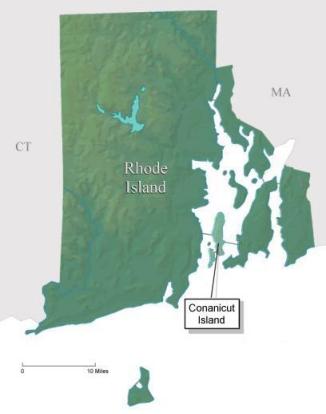
If you're registered for an online workshop, you're invited to attend hour-long sextant practical sessions in Rhode Island and Connecticut scheduled as weather and other factors permit. These live, in-person sessions are included in your registration for online classes.
Comments:
Homer Smith wrote: 10👍
Dr. Russell D. Sampson wrote: 32👍
I took Frank's 19th Century Celestial Navigation class in April 2013 and really enjoyed it. Not only was the class interesting but my fellow classmates were too; a retired skipper of a ballistic missile sub, the son of the fellow who invented GPS, a teacher, a captain of a Panamax container ship and a fellow who crossed the Atlantic solo - twice!
The class was also a great resource for my teaching and my own research interests such as the visibility of celestial objects in the daytime (Jupiter and Venus) and the effects of astronomical refraction near the horizon. I hope to take more workshops with Frank.
Dr. Russell D. Sampson
Wickware Planetarium
Eastern Connecticut State University
The class was also a great resource for my teaching and my own research interests such as the visibility of celestial objects in the daytime (Jupiter and Venus) and the effects of astronomical refraction near the horizon. I hope to take more workshops with Frank.
Dr. Russell D. Sampson
Wickware Planetarium
Eastern Connecticut State University
Mark Coady wrote: 12👍
I have now done every course I think that has been offered so far at Mystic Seaport taught by Frank Reed in the last two years. I found the courses to all be extremely rewarding.
Several things stand out. The course material is presented in a balanced way, with a well thought mixture of detailed calculation, broken up by historical, factual, and hands-on aspects. This type of teaching is well suited to most, as it provides periods of more intense reasoning with relaxation and humor. Anyone can walk away with new-found knowledge. I also feel that the approach of understanding historical context and a simple practical approach is unique. It has gone a great way toward clearing up a lot of my preconceived ideas and confusions resulting from the many contradictory or esoteric approaches found in various volumes or on the internet.
Very simply, I learned a lot and it went a long way toward clearing up a mess. I was fascinated the whole time. The courses and NavList provide the tools to keep learning even after the course is over. I left able to measure what I see with a more calibrated eye for real world application, and a greater appreciation of human history. I can strongly recommend these classes for the curious, the fascinated, the historian, the hardcore navigator, or the armchair one. There is something in them for all.
I also found the NavList community to be helpful and encouraging as my journey continues. I hope I can undertake even more material in additional courses in the future.
"There is nothing - absolutely nothing - half so much worth doing as simply messing about in boats" (Kenneth Grahame, from the "Wind in the Willows")
Capt. Mark
Several things stand out. The course material is presented in a balanced way, with a well thought mixture of detailed calculation, broken up by historical, factual, and hands-on aspects. This type of teaching is well suited to most, as it provides periods of more intense reasoning with relaxation and humor. Anyone can walk away with new-found knowledge. I also feel that the approach of understanding historical context and a simple practical approach is unique. It has gone a great way toward clearing up a lot of my preconceived ideas and confusions resulting from the many contradictory or esoteric approaches found in various volumes or on the internet.
Very simply, I learned a lot and it went a long way toward clearing up a mess. I was fascinated the whole time. The courses and NavList provide the tools to keep learning even after the course is over. I left able to measure what I see with a more calibrated eye for real world application, and a greater appreciation of human history. I can strongly recommend these classes for the curious, the fascinated, the historian, the hardcore navigator, or the armchair one. There is something in them for all.
I also found the NavList community to be helpful and encouraging as my journey continues. I hope I can undertake even more material in additional courses in the future.
"There is nothing - absolutely nothing - half so much worth doing as simply messing about in boats" (Kenneth Grahame, from the "Wind in the Willows")
Capt. Mark