I have now done every course I think that has been offered so far at Mystic Seaport taught by Frank Reed in the last two years. I found the courses to all be extremely rewarding.
Several things stand out. The course material is presented in a balanced way, with a well thought mixture of detailed calculation, broken up by historical, factual, and hands-on aspects. This type of teaching is well suited to most, as it provides periods of more intense reasoning with relaxation and humor. Anyone can walk away with new-found knowledge. I also feel that the approach of understanding historical context and a simple practical approach is unique. It has gone a great way toward clearing up a lot of my preconceived ideas and confusions resulting from the many contradictory or esoteric approaches found in various volumes or on the internet.
Very simply, I learned a lot and it went a long way toward clearing up a mess. I was fascinated the whole time. The courses and NavList provide the tools to keep learning even after the course is over. I left able to measure what I see with a more calibrated eye for real world application, and a greater appreciation of human history. I can strongly recommend these classes for the curious, the fascinated, the historian, the hardcore navigator, or the armchair one. There is something in them for all.
I also found the NavList community to be helpful and encouraging as my journey continues. I hope I can undertake even more material in additional courses in the future.
"There is nothing - absolutely nothing - half so much worth doing as simply messing about in boats" (Kenneth Grahame, from the "Wind in the Willows")
Capt. Mark
Chasing Miaplacidus
Where did this name for β Carinae (or β Argus) originate? An earlier spelling was "Maia Placidus" but that's not significant. Most sources, including Wikipedia and others, follow Allen's "Star Names" (c.1899) which attributes it to Elijah Burritt's popular 19th century "Geography of the Heavens". Allen also mentioned an entirely speculative etymology published by one W.H. Higgins in 1882 (the "placidus" part is clearly Latin; Higgins suggested "maia" might be from Arabic for "water" but that was just guesswork --the sort of thing all too common in Allen's "Star Names"). The name "Maia Placidus" appears in Burritt's "Geography of the Heavens" in a peculiar large chart in his atlas, which was also available as a large linen wall chart. It's his so-called "planisphere" which is a Mercator chart of a large portion of the celestial sphere. It's an oddity in Burritt since it's drawn in a different style from the main atlas and includes different choices for some modern constellations. And at the very bottom, there's "Maia Placidus" which is also mentioned briefly in the text.
Why this strange "planisphere" chart? How does "Maia Placidus" appear out of thin air?? The simple answer appears to be that Burritt stole it (*). I discovered a couple of months ago (August, 2022) that Burritt's planisphere chart seems to be a direct copy (with some high latitudes wisely trimmed off) of a nearly identical Mercator projection of the sky in a nautical astronomy/celestial navigation work, "The Young Navigator's Guide...", published in Britain by Thomas Kerigan in 1821. Kerigan's chart includes constellation boundaries identical to Burritt's as well as the (otherwise inexplicable in Burritt's copy) path of a comet from 1819, and it also includes "Maia Placidus". Kerigan even works some computations using that star in the main text of his book.
We still have no explanation for the name "Miaplacidus". There's little doubt it's a modern coinage. Its origin is pushed back to 1821 at least, in Kerigan's navigation textbook. And now maybe the mystery of Burritt's peculiar "planisphere" chart may be solved. Burritt stole/borrowed the primary constellation artwork in his "Geography of the Heavens" from Jameson. He stole/borrowed his planisphere chart from Kerigan. This intellectual property "violation" was quite normal in the USA in this period. Nathaniel Bowditch mostly copied his "New American Practical Navigator" from British sources. Charles Dickens a decade later was infamously astounded to discover he was a pop superstar in the US despite never having made a dime off any of his books here.
* Alternative theory: both Kerigan and Burritt may have copied their "planisphere" Mercator charts from a third source, which I haven't yet seen. There's a Mercator planisphere by W. Croswell from 1810, which is broadly similar, but nothing like the near-perfect match between Kerigan and Burritt.
Frank Reed
Clockwork Mapping / ReedNavigation.com
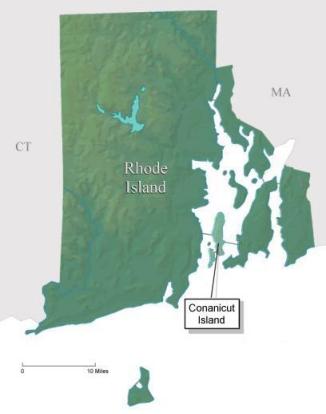
Conanicut Island USA


Comments:
Mark Coady wrote: 11👍
Philip M. Sadler wrote: 85👍
What a joyful and stimulating experience to enroll in Frank Reed's class, Celestial Navigation: 19th Century Methods. Frank is a skillful and engaging teacher, able to draw students into this fascinating subject, whether they be novice or experienced. His depth of knowledge is tremendous. Participants get a real taste of what it was like to be aboard a sailing ship of the day. I learned much to enliven my own teaching and decode 19th century ship's logs. It is a rare experience, indeed, to have so much thoughtfulness, enthusiasm, and fun packed into two days. This is the way to learn!
Philip M. Sadler, Ed.D.
F.W. Wright Senior Lecturer in Celestial Navigation
Harvard University Astronomy Department
Cambridge, MA
Philip M. Sadler, Ed.D.
F.W. Wright Senior Lecturer in Celestial Navigation
Harvard University Astronomy Department
Cambridge, MA
Greg Rudzinski wrote: 6👍
The online class "Lunars: Finding Longitude by Lunar Distance" was a very interesting introduction to the esoteric history of lunars as practiced at sea in the pre chronometer 18th century tall ship era. Practical instruction was also done demonstrating the physical process of observing a lunar with a sextant followed by a how to lunar sight reduction example using a pocket calculator, formulae, and tables. A very rewarding experience.
Greg Rudzinski
Retired Merchant Mariner
SUNY Maritime class of 80
Greg Rudzinski
Retired Merchant Mariner
SUNY Maritime class of 80